
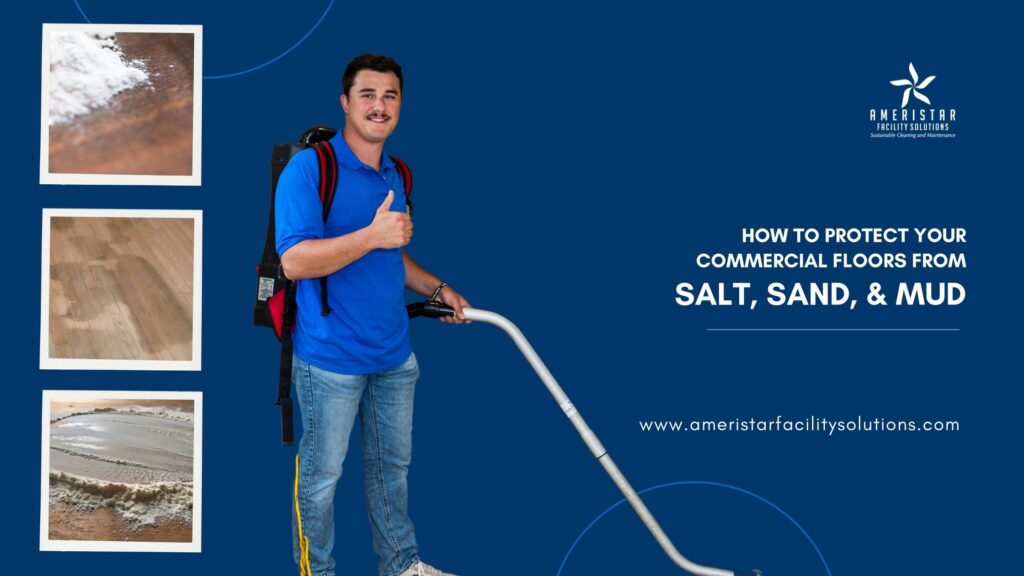
Commercial floors endure heavy daily traffic, especially in offices, retail stores, healthcare facilities and industrial buildings. During certain times of the year, particularly in winter and rainy seasons, outside elements such as salt, sand and mud can easily be tracked indoors. These materials may seem harmless at first, but over time they can cause serious damage to commercial flooring.
Salt can leave stains and chemical residue, sand can scratch surfaces, and mud can create slippery conditions that increase safety risks. Protecting your floors from these elements is essential to maintaining a clean, safe, and professional looking facility. Below are practical strategies businesses can use to safeguard their commercial floors.
Understand How Salt, Sand, and Mud Damage Floors
Before implementing protective measures, it helps to understand how these materials affect flooring surfaces.
– Salt: Deicing salt used during winter can leave white residue and chemical stains on floors. Over time, salt can weaken floor finishes and cause discoloration.
– Sand: Sand acts like sandpaper when walked across floors. As people walk through the building, sand particles grind against the surface, causing scratches and dulling the finish.
– Mud: Mud brings moisture and dirt indoors, creating both cleanliness issues and slip hazards.
Without proper prevention and cleaning practices, these elements can quickly wear down floor surfaces and increase maintenance costs.
Install High Quality Entrance Mats
One of the most effective ways to protect commercial floors is by installing high quality entrance matting systems. Mats act as the first line of defense by trapping dirt, moisture, and debris before it reaches interior floors.
A good entrance mat system typically includes:
– Scraper mats outside the entrance to remove heavy debris
– Absorbent mats inside to capture moisture and dirt
– Extended walk off mats in high traffic areas
Experts recommend providing at least 10 to 15 feet of walk off matting to significantly reduce the amount of debris tracked inside.
Regular cleaning of these mats is important so they continue functioning effectively.
Implement Frequent Floor Cleaning During High Traffic Periods
During seasons when salt, sand, and mud are commonly tracked indoors, increasing the frequency of floor cleaning is essential.
Daily maintenance should include:
– Sweeping or dust mopping to remove loose sand and debris
– Damp mopping to remove salt residue and mud
– Spot cleaning wet or muddy areas immediately
Removing abrasive materials quickly helps prevent scratches and damage to the floor finish.
High traffic areas such as entrances, hallways, and lobbies may require multiple cleanings throughout the day.
Protect Floors with Proper Finishes and Coatings
Applying the right floor finish or protective coating can help shield floors from damage caused by sand, salt, and moisture. Floor finishes create a protective barrier that absorbs wear and tear instead of the actual flooring material.
Benefits of proper floor finishing include:
– Improved resistance to scratches and scuffs
– Easier cleaning and maintenance
– Protection from moisture and chemical residue
– Longer floor lifespan
Routine floor maintenance services such as stripping and waxing can restore this protective layer and keep floors looking polished and professional.
Address Wet and Muddy Areas Quickly
Mud and moisture not only make floors dirty but can also create dangerous slip hazards. Quick action is important to maintain both cleanliness and safety.
Businesses should:
– Place caution signs near wet areas
– Clean muddy footprints promptly
– Replace saturated entrance mats
– Ensure entryways remain dry and clear
Maintaining safe floor conditions protects both employees and visitors from potential accidents.
Schedule Professional Floor Maintenance
While daily cleaning helps reduce immediate damage, professional floor maintenance is essential for long term protection. Commercial cleaning professionals have the tools, equipment and expertise needed to maintain different types of flooring.
Professional services may include:
– Floor stripping and waxing
– Machine scrubbing and polishing
– Deep cleaning for tile, vinyl, and hard surfaces
– Specialized treatments for high traffic areas
Regular professional maintenance keeps floors looking their best while preventing costly repairs or premature replacement.
Final Thoughts
Salt, sand, and mud are unavoidable in many commercial environments, especially during winter or rainy seasons. However, with the right preventive strategies, businesses can significantly reduce the damage these materials cause.
Using proper entrance matting, increasing cleaning frequency, applying protective floor finishes, and scheduling professional maintenance all play a critical role in preserving the appearance and durability of commercial floors.
Taking proactive steps today can help extend the life of your flooring and maintain a clean, professional environment for employees and visitors.
Schedule Commercial Floor Cleaning and Maintenance Services
AmeriStar Facility Solutions provides expert commercial cleaning and floor care services designed to protect and maintain your facility. Our experienced team uses professional techniques and equipment to keep your floors clean, safe, and looking their best year round.
Contact us at (570) 675-5525 or visit www.ameristarfacilitysolutions.com to learn more about our commercial cleaning and floor maintenance solutions.