
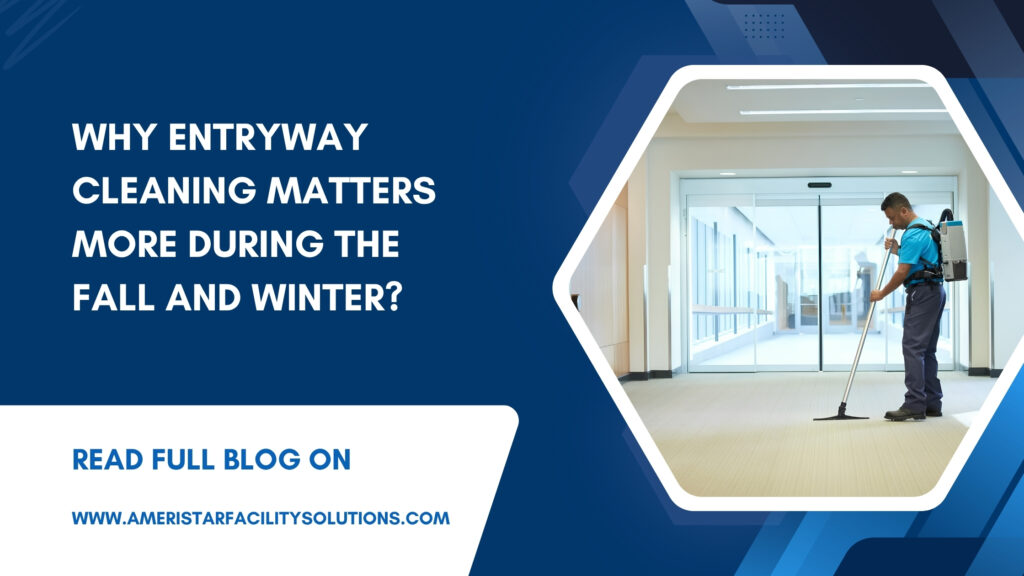
An entryway rarely looks urgent. A damp mat, a few leaves, some grit tracked in, none of it seems worth stopping for in the moment. But none of it stays contained to the entryway either. Given a few weeks, it turns into something larger, and it reaches further into the building than most facility teams expect.
Fall and winter make this more pronounced. More rain, more debris, more moisture coming through the door than most buildings deal with the rest of the year.
It Starts With Moisture and Debris
The first stage is small enough that most facility teams don’t think twice about it. A wet floor mat that doesn’t get changed. Leaves and grit sitting near the door for longer than they should. Rain tracked in on shoes that isn’t wiped up right away.
None of this looks urgent because none of it is, not yet. A little moisture on tile or a few leaves in a corner doesn’t damage anything on its own. The issue is what happens when this stage repeats daily for weeks without anyone addressing it directly.
Which Leads to Buildup Further Inside
Moisture and debris don’t stay at the entrance. Foot traffic drags it further in. Hallways, elevators, common areas, none of it is built to handle entryway-level grime.
Floors past the entrance start feeling gritty. Carpet nearby stays damp longer than it should. Something’s off, and most of the time nobody can say exactly why. It usually traces back to the door.
Which Leads to Flooring Damage
Weeks of this and the flooring starts showing it directly. Tile picks up a dull film that mopping alone won’t clear. Hardwood swells near high-traffic paths, sometimes discolors. Carpet holds stains that weren’t there a month earlier.
It’s not one bad day that causes this. It’s every small stage before it, finally catching up with the floor. A standard cleaning pass usually can’t undo it at this point.
Which Leads to Safety and Liability Issues
A worn floor near an entrance is where a lot of slips actually happen. Add moisture and it’s worse. The finish doesn’t grip like it did when it was new, and nobody notices until they’re already off balance.
Safety’s the obvious concern. But there’s a second one right behind it. An incident near flooring that clearly hadn’t been kept up raises different questions than a single spill ever would. Insurance, liability, how a customer even describes what they saw on the way in, none of it looks good against a worn, dirty entryway.
Most slips like this don’t happen on a floor that was cleaned that morning. They happen weeks into smaller things nobody dealt with. By the time it gets here, it’s already the most expensive stage on the list.
Breaking the Chain Early
Every stage in this chain starts in the same place: moisture and debris that never got dealt with at the door. Catch it there, and the rest of it never happens.
Regular entryway cleaning through fall and winter does exactly that. Mats changed often enough to actually catch moisture, not just look like they’re catching it. A mat that’s saturated by midday isn’t doing anything for the next fifty people walking through. Entrances cleaned more than once a day when it’s wet out, since a single morning pass rarely holds up once rain’s been coming and going all afternoon. Spills and tracked-in debris handled right when someone notices, not whenever the next scheduled pass happens to roll around.
It’s not complicated work. It’s just work that has to happen consistently, at the door, before any of it has a chance to spread. Most facility teams already know this in theory. The gap is usually in execution, a mat schedule that hasn’t been adjusted since summer, or an entrance cleaning frequency that was set once and never revisited as the seasons changed.
The buildings that handle fall and winter well aren’t doing anything unusual. They’re just not skipping this part.
Partner With a Professional Cleaning Team
Entryway needs shift with the weather, and most in-house schedules aren’t built to shift with them. A cleaning routine set up in June doesn’t automatically know it needs to change once October brings rain three days a week instead of one.
A professional cleaning team can adjust entrance cleaning frequency as conditions actually change, rather than sticking to a routine built for a drier, calmer season. That might mean more frequent mat changes during a stretch of wet weather, extra entrance passes on the worst days, or simply having someone available to respond when conditions shift faster than expected. It also means someone’s actually tracking what the entryway needs week to week, instead of that falling on whoever happens to notice the floor looks bad.
Catching this at the door is almost always cheaper than dealing with it three stages later. A slightly heavier cleaning schedule through the wetter months costs far less than replacing damaged flooring, or dealing with the aftermath of a slip that traces back to an entrance nobody kept up with.
Fall and winter are exactly when that small stuff at the door turns into bigger stuff further inside, if nobody’s paying attention to it.
At AmeriStar Facility Solutions, we handle exactly this kind of seasonal shift for commercial properties, day in and day out. Whatever your building’s dealing with this season, our team can build a cleaning plan around it rather than a one-size-fits-all routine that doesn’t account for what’s actually coming through the door.
Contact us at (570) 675-5525 or visit www.ameristarfacilitysolutions.com