
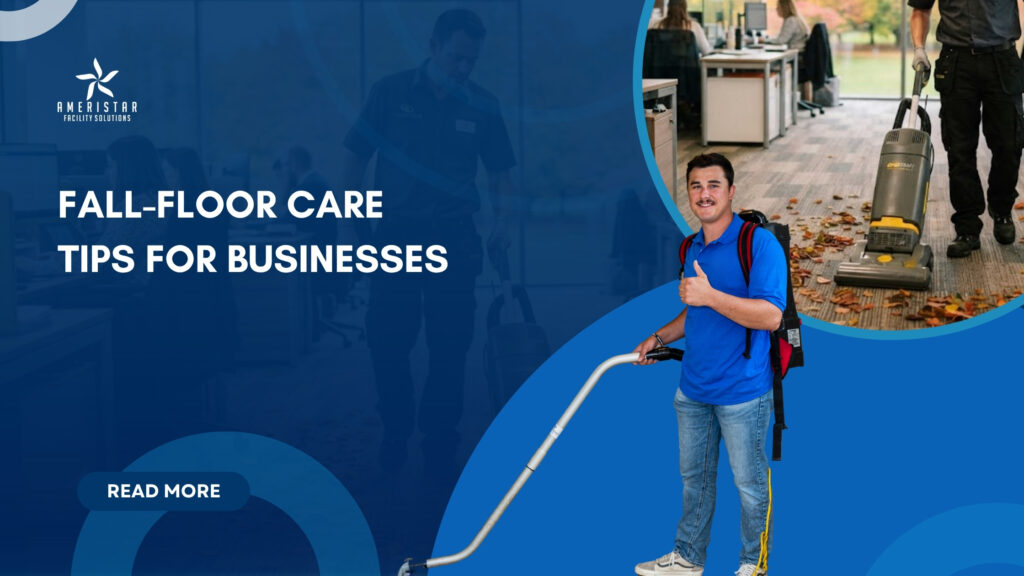
Flooring takes on more strain once fall sets in. Wet leaves get tracked in near entrances, rainfall picks up, and foot traffic climbs as the holiday season gets closer. A floor that looked fine back in September can start showing real wear by November if the cleaning routine doesn’t adjust for it.
It’s rarely one incident that causes the damage. It’s usually mud near a doorway that sits too long or a puddle nobody notices for an hour, repeated often enough that it starts to show.
Most businesses that avoid this simply shift their cleaning schedule a bit for the season, rather than waiting until there’s an actual problem to deal with. A small adjustment now tends to save a bigger one later.
Wet Leaves and Rain Create Slip Hazards
Wet leaves cause more slips than most businesses account for. They get tracked in on shoes, land on hard flooring, and turn slippery almost right away, especially on tile or anything polished near an entrance. A sudden rain shower makes it worse, turning the same entryway into a real risk area rather than just a minor inconvenience.
A few things help here. Larger floor mats at entrances, not the small ones that barely cover the doorway. Cleaning entrances more often right after rain, instead of waiting for whatever’s next on the schedule. Wet spots get handled the moment someone notices them. That’s really it. Waiting just gives a puddle time to spread, or dry into something that stains.
Entrances take the highest traffic and carry the highest risk once the weather turns, which is why they need the extra attention first.
Falling Temperatures Bring Condensation
Once it gets colder outside, warm air inside meets cold glass and floors near entrances, and that gap in temperature creates condensation. Floors near windows or glass doors can end up damp without any rain at all involved, just from the shift happening over the course of a day.
HVAC switching over for the season adds to it. Heating that’s been sitting unused since last winter kicks up dust the second it turns back on. That dust lands on floors nearby, sometimes for days before anyone notices. Airflow changes too. Moisture moves through the building differently once the system’s running again, not always in ways anyone would expect.
Wipe down condensation near entryways and windows regularly. That’s really the main fix here. Floors near HVAC vents are worth a second look during this transition too. Dust builds up there fast, and it’s easy to miss until weeks have gone by.
Increased Foot Traffic as the Holiday Season Approaches
Foot traffic starts picking up before the holidays even really begin. Retail feels it first. Offices, healthcare facilities, warehouses, all of it climbs too, just in different ways, more deliveries, more visitors, more people moving through common areas than usual.
Floors wear faster once that happens. Spots that only needed attention once a week start needing it twice, sometimes more. Entrances, hallways, elevators, these are usually the first to show it.
A cleaning schedule that worked fine in a slower month doesn’t always hold up once things speed up. Adding one extra pass through the busiest areas, even just for November and December, keeps floors from falling behind everything else going on in the building.
Salt and De-Icing Residue Shows Up Earlier Than Expected
Salt gets treated like a winter problem, but the first frosty mornings in fall bring some of it in early, especially anywhere frost hits before winter officially starts. It tracks in on shoes, settles near entrances, and barely looks like anything until it’s been building for a couple weeks.
By then it’s dulling the floor. Sometimes there’s a faint white film. Finishes wear down faster than they would from foot traffic alone, and most people don’t catch it early because it just doesn’t register as dirt the way mud does.
Mopping entrances with something actually made for salt residue, not just water, clears most of it out. Doing that early, before the real cold sets in, keeps the damage from carrying straight into winter on top of whatever else the floors are already dealing with by then.
Different Flooring Needs Different Care
Tile, hardwood, carpet, polished concrete, none of it responds to fall the same way, which is easy to forget when the cleaning crew’s just trying to get through the building on schedule. Tile handles moisture fine but shows salt film and grit fast. Hardwood’s the opposite, moisture’s the real enemy there, and standing water near an entrance can do real damage in a way it never would to tile.
Partner With a Professional Cleaning Team
Every facility handles fall a little differently. Traffic levels, flooring, how exposed the entrances are to weather, it all plays into what actually needs attention. A professional cleaning team builds a plan around that instead of running the same checklist on every building regardless of what it actually needs.
Waiting until something’s already wrong usually costs more. A stain that’s set in, a slip that already happened, a finish that wore down faster than it should have, all of that tends to run higher than just staying ahead of it would have.
Floors take a real beating every fall. Wet leaves, rain, that first early frost, more people coming through the door as the holidays get closer, none of it looks like much day to day, but a season of it adds up on flooring fast.
At AmeriStar Facility Solutions, we handle exactly this kind of seasonal shift for commercial properties, day in and day out. Whatever your building’s dealing with this fall, our team can build a cleaning plan around it rather than a one-size-fits-all routine.
Contact us at (570) 675-5525 or visit www.ameristarfacilitysolutions.com